
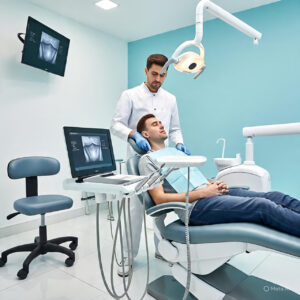
In today’s rapidly evolving world, technology is revolutionizing every aspect of life, including healthcare. One of the most exciting transformations is happening in dental care, where digital dentistry is changing how patients receive treatment and how dentists perform their work.
With the rise of cutting-edge tools and techniques, dentistry is becoming more accurate, less invasive, and more comfortable for patients. From 3D imaging and AI-driven diagnostics to laser treatments and digital impressions, the dental experience is getting smarter, faster, and better.
This blog explores how technology is enhancing dental care, why it matters for your oral health, and what to expect at a modern dental clinic.
What Is Digital Dentistry?
Digital dentistry refers to the use of digital technologies or computer-based components in place of traditional mechanical methods to perform dental procedures.
Instead of relying on molds, manual x-rays, or guesswork, today’s dentists use advanced tools such as:
-
Digital X-rays
-
Intraoral scanners
-
CAD/CAM (Computer-Aided Design and Manufacturing)
-
3D printers
-
AI software
-
Laser equipment
These innovations improve patient care, reduce errors, and help with better planning and faster treatment delivery.
Benefits of Digital Dentistry
Let’s explore the many ways in which digital dentistry enhances oral health care:
1. Improved Diagnosis
Thanks to 3D imaging and digital X-rays, dentists can now see your entire mouth with incredible clarity. These images provide more detailed insights into gum disease, cavities, bone density, and hidden infections.
As a result, diagnosis becomes quicker, more accurate, and proactive.
2. Faster Treatment Planning
Using tools like CAD/CAM, dentists can design crowns, veneers, and bridges digitally. This reduces wait times and minimizes the number of dental visits required.
What once took weeks now takes just hours.
3. Greater Patient Comfort
Say goodbye to messy molds. With intraoral scanners, your teeth are scanned in minutes using a small digital wand. This means a more comfortable and faster experience, especially for kids and anxious patients.
4. Predictive and Preventive Care
Artificial intelligence (AI) plays a key role in detecting early signs of tooth decay, gum disease, or alignment issues. This allows dentists to intervene before a condition worsens.
Preventive care has never been smarter.
5. Minimally Invasive Procedures
Laser dentistry is now replacing the traditional drill in many procedures. It causes less pain, less bleeding, and faster healing. It’s ideal for gum treatments, fillings, and even teeth whitening.
Digital Dentistry in India: A Growing Trend
India is quickly embracing digital dental care. Urban clinics and dental hospitals are investing in advanced tools to stay ahead. This shift is driven by:
-
Patient demand for faster, pain-free procedures
-
Growing awareness about oral hygiene
-
The rise of cosmetic dentistry
-
Global advancements influencing local standards
Leading dental clinics in cities like Delhi, Mumbai, Bengaluru, and Hyderabad now offer full digital workflows—from diagnosis to final treatment.
Even mid-sized towns are catching up, making advanced dental care more accessible to the masses.
Popular Digital Dental Technologies in Use
Let’s take a closer look at the most commonly used digital tools and systems in modern dentistry:
1. Intraoral Cameras
These tiny cameras allow dentists to project real-time images of your mouth onto a screen. This improves communication, helps with patient education, and supports accurate diagnosis.
2. Digital X-rays
Unlike traditional X-rays, digital versions reduce radiation exposure and deliver instant, high-resolution images.
3. Cone Beam CT Scans
Used mainly for implants, root canals, and jaw surgery planning, these scans provide 3D images of the mouth, jaw, nerves, and sinuses.
4. CAD/CAM Technology
CAD/CAM machines are revolutionizing prosthetic dentistry. They enable same-day crowns, bridges, and veneers to be designed and manufactured right in the clinic.
5. 3D Printing
3D printers are used to create surgical guides, custom trays, dentures, aligners, and even temporary restorations with high precision and speed.
6. Laser Dentistry
Dental lasers are used for soft tissue surgeries, cavity treatments, teeth whitening, and more. They reduce the need for anesthesia and offer minimal healing time.
7. AI-Powered Diagnostic Tools
Some clinics now use AI-based tools that automatically analyze dental X-rays for signs of issues like tooth decay, bone loss, or oral cancer. These tools assist dentists in making informed decisions quickly.
How Digital Dentistry Enhances Patient Experience
One of the major advantages of tech-enhanced dental care is improved patient experience. Here’s how:
-
Faster Appointments: Fewer sessions and quicker treatments save time.
-
Pain-Free Procedures: Less discomfort due to lasers and digital tools.
-
Visual Understanding: Patients can see what the dentist sees, which builds trust.
-
Custom Treatments: Personalized aligners, crowns, and dental appliances lead to better results.
-
Digital Records: All your dental history is stored securely and can be shared easily with specialists.
What to Expect at a Digital Dental Clinic
Visiting a digitally advanced clinic is a very different experience compared to traditional setups. Here’s what you can expect:
-
Digital check-in via tablet or smartphone
-
A digital scan of your teeth instead of a physical impression
-
Instant 3D visuals showing your current dental condition
-
Digital simulation of before-and-after treatment results
-
Access to your dental history and X-rays online
-
Guidance on how technology is improving your oral health
The Role of Dentists in a Digital Age
Despite all the advanced tools, the role of dentists remains as crucial as ever. Technology supports their expertise—it doesn’t replace it.
In fact, dentists must now be trained not only in clinical skills but also in using new software, hardware, and digital platforms. Many continue to update their knowledge through online courses, workshops, and certifications in digital dentistry.
Challenges in Adopting Digital Dentistry
Although the future looks bright, there are a few hurdles to widespread adoption:
-
The cost of digital equipment is high, especially for small clinics.
-
Need for training in new technologies.
-
Patients in rural areas may still prefer conventional methods.
-
Some insurance companies may not cover digital treatments yet.
However, with growing demand and government push for digital healthcare, these challenges are expected to reduce shortly.
Conclusion: The Future of Dental Care Is Digital
There’s no doubt that digital dentistry is transforming oral healthcare in India and around the world. It offers precision, speed, comfort, and better outcomes for both patients and dentists.
Whether you’re going for a routine dental check-up, a cosmetic treatment, or a complex procedure like an implant, digital tools can make the experience smoother and more effective.
As technology continues to advance, one thing is clear: the smile of the future is a digitally enhanced one.
Embrace the future. Embrace digital dental care.